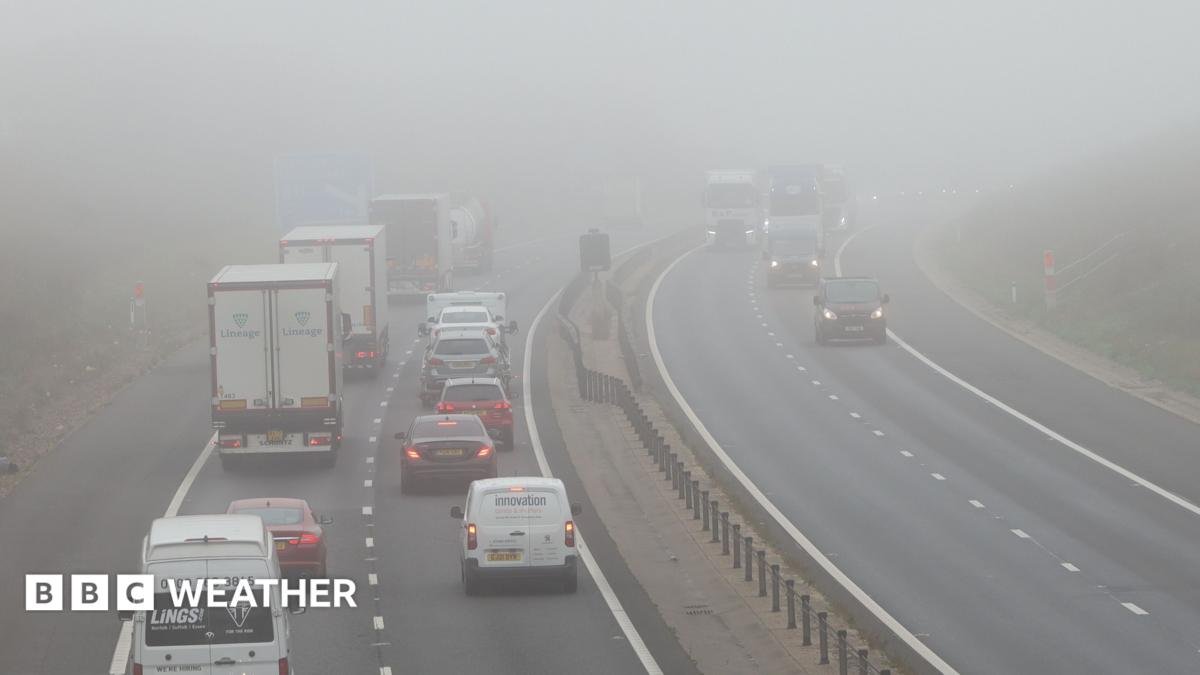
Commuters in parts of England and eastern Wales are bracing for a second day of severe travel disruption as thick fog blankets the region once again. The Met Office has issued a yellow warning for fog, now in its fourth consecutive day, covering the Midlands, East Anglia, the northern home counties, Yorkshire and the Humber, and parts of Cheshire. North-eastern counties of Wales, including Powys, Denbighshire, Conwy, Flintshire, and Wrexham, are also affected.
Warning Period and Impact
The warning came into effect at 18:00 GMT on Monday and will remain until 10:00 GMT on Tuesday. Forecasters warn that visibility could drop below 100 meters in some areas, leading to further travel chaos. On Monday, Heathrow Airport cancelled 40 flights before the fog cleared, and over the weekend, the fog caused a 30-car pile-up on the M20 in Kent, leaving two people seriously injured, as well as a 19-car collision on the A303 in Hampshire.
Cause and Forecast
Fog is not uncommon at this time of year, as longer nights and weaker sunshine allow temperatures to drop, causing moisture in the air to condense. High pressure can also lead to stagnant air, trapping the fog. However, this week's weather is expected to be changeable. A low-pressure system approaching from the south-west will push weather fronts northwards across England and Wales, bringing cloud, rain, and brisk easterly winds later on Tuesday. This should make fog less likely on Wednesday morning, though it may still form across Northern Ireland and Scotland, particularly in the Central Belt and the glens of the south.
Towards the end of the week, a cold front will sweep southward, introducing a northerly wind and colder, drier air from the Arctic. This will reduce the likelihood of widespread fog, although morning frosts are expected.
Safety Advice
The Met Office advises drivers to check road conditions before setting off and to use fog lights when visibility is seriously reduced. Visibility of 50 meters or less can cause severe disruption, so allow extra time for journeys and adjust plans if necessary. Patchy fog can be particularly dangerous because visibility can change suddenly.
The RAC recommends allowing extra stopping distance between vehicles, and AA president Edmund King warned against the common mistake of following the rear lights of the car in front, which can give a false sense of security and lead to travelling too close to react safely if the vehicle suddenly stops.
For those using public transport or flying, check for updates from your operator and follow their advice. Flights may be delayed because aircraft need greater spacing when landing in fog.