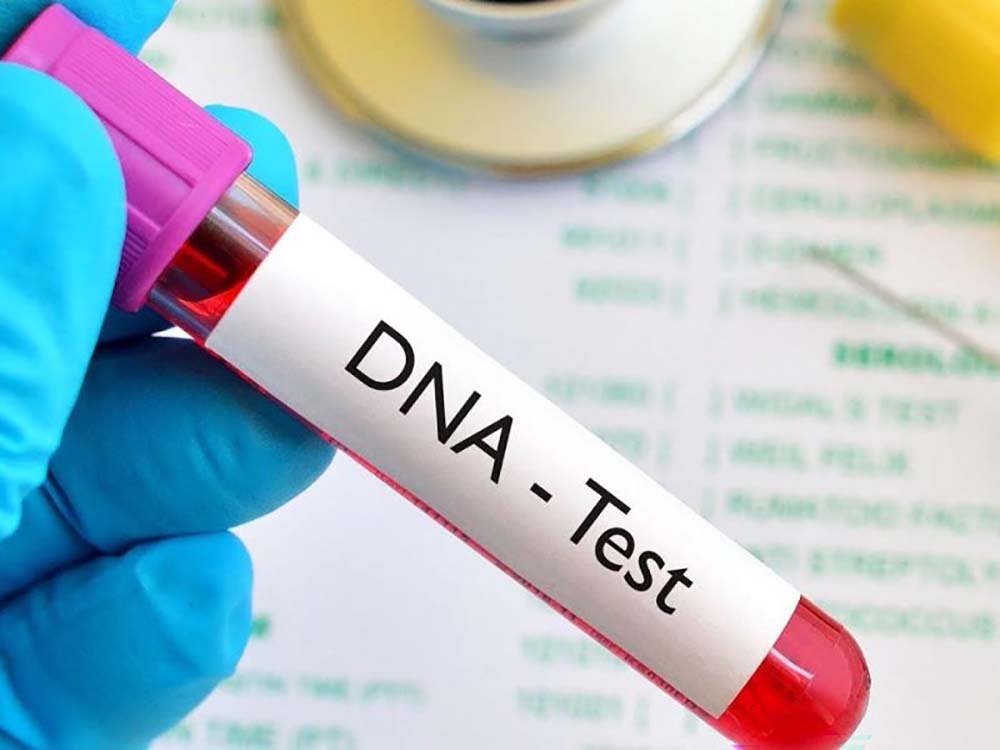
KAMPALA - A land dispute rooted in family lineage has taken an unusual turn after the High Court directed two women to undergo DNA testing to confirm whether they are biological sisters, a question that could determine who has a legitimate claim to a contested piece of family property.
Justice Ida Nakiganda issued the order, instructing the Government Analytical Laboratory in Wandegeya, Kampala, to carry out the test on Harriet Nandutu and Sarah Adeke. The results will establish whether the two women share the same biological mother, a detail the court considers central to resolving the case before it.
Roots of the Dispute
The application stems from Civil Suit No. 779 of 2025, in which Nandutu is seeking a stake in land registered as Kyadondo Block 229 Plot 2693, located at Kamuli. She argues that she is a beneficiary of the estate of the late Veria Nakanyike and therefore entitled to a share of the property.
In her submissions, Nandutu told the court that she and Adeke are both daughters of the late Eroni Namuyingo, who was herself a daughter of Nakanyike. According to her account, that blood connection is the foundation of her claim to the family land, and proving it has become unavoidable.
The court appears to have accepted that the question of biological relation cannot be settled by testimony alone, hence the directive for scientific verification. The DNA results are expected to clarify whether the two women are indeed siblings and, by extension, whether Nandutu has a valid foothold in the estate.
Why It Matters
Land disputes tied to inheritance are a familiar feature of Uganda's courts, where questions of identity, lineage and documentation often sit at the heart of bitter family feuds. In this case, the outcome hinges less on paperwork than on biology, a reminder of how deeply personal property conflicts can become.
The order also highlights the growing use of forensic evidence in civil matters, where courts increasingly rely on scientific proof to cut through conflicting family narratives.
Neither party has commented publicly on the directive, and the matter now awaits the laboratory's findings before the court can proceed. For Nandutu and Adeke, the test may settle more than a legal question: it could redefine a family relationship that has already been placed under the microscope of the justice system.