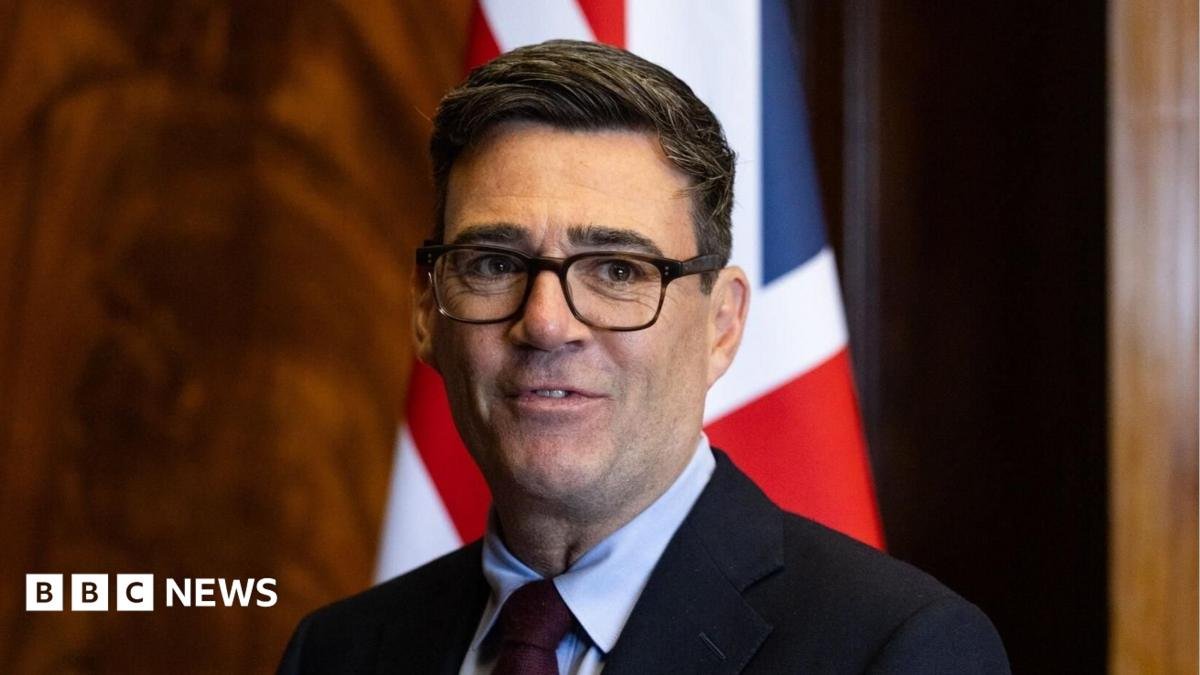
Prime Minister Andy Burnham's renewed push for closer ties with the European Union is causing ripples within his own party and across the political spectrum. In a Cabinet meeting earlier this week, Burnham expressed his belief that the current Brexit deal, negotiated by the Conservatives, is not delivering for the country. "I firmly believe we have ended up with a harder Brexit than people voted for," he told ministers, according to sources. "No sensible person thinks the deal negotiated by the Tories is working for the country."
A Week of European Engagement
The Prime Minister's comments come ahead of a busy week focused on the UK's relationship with the bloc. On Thursday, Burnham will attend a gathering of European leaders in Dublin, where he will meet key figures for the first time as he promotes his vision for Britain's future in Europe. Next week, he will deliver a foreign policy speech in which Europe will feature prominently, followed by a trip to Brussels for a UK-EU summit to sign new agreements on food, energy, and youth mobility. "We will take opportunities that make people in this country better off," Burnham told ministers, highlighting the potential benefits of the new deals.
Divided Cabinet and Party
However, Burnham's longer-term ambition to potentially rejoin the EU single market, customs union, or even the EU itself has exposed divisions within his cabinet and party. Some, like Housing Secretary Angela Rayner, have reportedly been urging bolder action on Brexit since at least autumn 2022. Rayner is said to insist that Labour must stick to its manifesto red lines for now, but is open to changing them at the next election. Another cabinet minister praised Burnham's honesty: "The best thing you can do in politics is tell the truth. And the truth is that Brexit has been hugely damaging to Britain. We are not leading a public conversation here, we are racing to catch up with the public."
Yet others are more cautious. Home Secretary Shabana Mahmood has warned about the "costs and consequences" of both rejoining and staying out. Business and Trade Secretary Jonathan Reynolds supports closer EU ties but has previously cautioned against joining the customs union and is unsure about rejoining the EU, citing uncertainty over terms and the bloc's future political landscape. Former Prime Minister Lord Cameron also weighed in, warning that "flirting with rejoining" could harm Burnham's attempts to renegotiate the current deal. "If you start endlessly producing this idea that we're actually on a path to rejoining, I think you're in danger of getting a less good partnership deal," he told Bloomberg.
Opposition from Within and Without
Attitudes within Labour do not divide along predictable lines. A Scottish Labour MP, personally opposed to Brexit and representing a heavily Remain-voting constituency, called the approach a "real problem," questioning how to reconcile the 2014 Scottish independence referendum with reopening the 2016 EU referendum. "My view is you accept democracy," the MP said. Gareth Snell, MP for Stoke-on-Trent, where 69.4% voted Leave, warned that reopening the debate would "monopolise an awful lot of time inside parliament, inside government." Despite these concerns, two Labour MPs among the most unhappy with Burnham's openness to Europe insisted there are "no plans" for organised criticism, describing their current stance as "wait and see."
Other parties are also grappling with the implications. The Conservatives, led by Kemi Badenoch, strongly oppose any future alignment with EU rules, with Badenoch pledging to withdraw the UK from the European Convention on Human Rights. However, some Conservative MPs fear the issue could again divide their voters. "Some of those voters are only just giving us a hearing again after Brexit," one MP said, "and now they are going to keep being reminded of it." The Liberal Democrats, traditionally the most pro-European party, worry their distinct position may be overshadowed by Burnham. Meanwhile, Reform UK says it is "very bullish" about Brexit returning to the political debate, with a strategist stating: "If he wants to fight an election on a £40bn bill to rejoin, open door immigration, and less control over our laws and our courts then we are very up for that."
As Burnham navigates this complex landscape, his approach to Europe is set to remain a defining issue in British politics, with potential repercussions for his party, his government, and the country's future relationship with the EU.