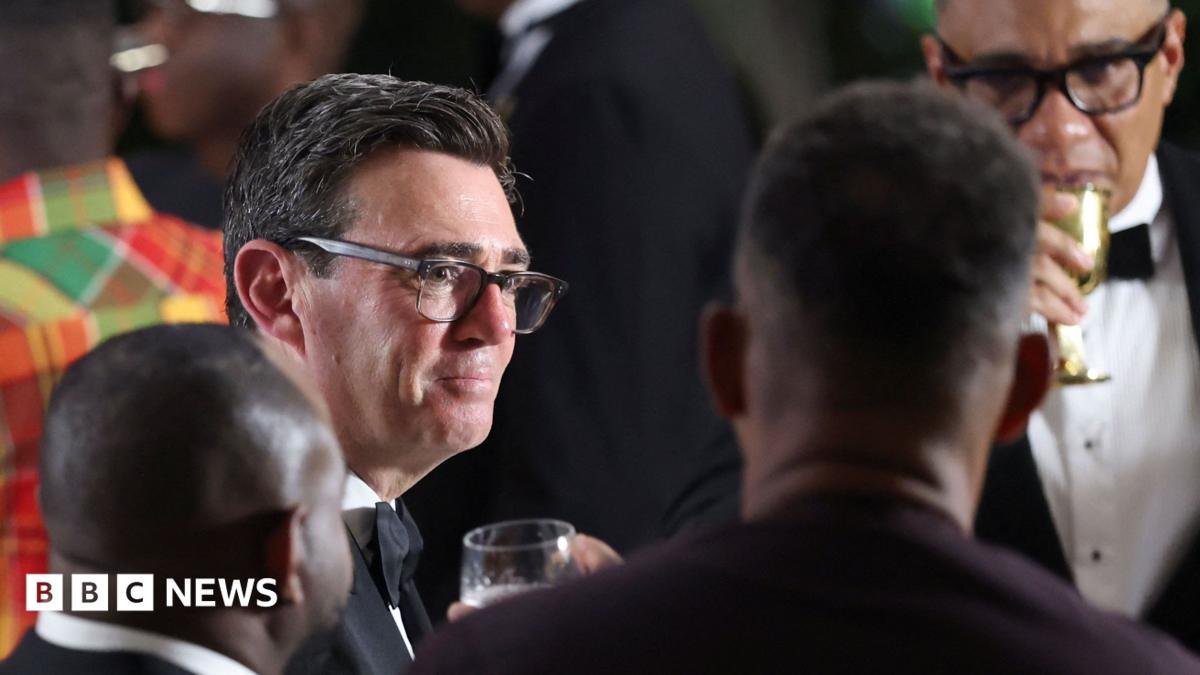
The first public remarks from the British prime minister following the American midterm elections offered an instant window into the fragile state of modern international diplomacy.
"Well, President Trump has accepted the results," Andy Burnham said.
It is a statement that British leaders once would never have needed to make about an American president, the simple acknowledgment that a sitting leader is not contesting the outcome of his own country's elections. What was once taken for granted can no longer be assumed.
A Relationship Still in Its Infancy
Burnham remains in the early stages of building a working relationship with the president. So far, that connection amounts to a handful of phone calls and a single face-to-face meeting on the sidelines of the United Nations gathering in New York in September.
As the prime minister works to establish a rapport with Donald Trump, he is dealing with a president whose political standing looks dramatically different from the one Sir Keir Starmer once sought to engage. This is no longer the story of a remarkable political comeback. It is the story of a midterm president who appears to have been punished for the fallout of a foreign war, the very kind of conflict he had originally pledged to steer clear of.
Cost of Living Takes Centre Stage
Notably, the British government's public response has been anchored in the consequences of the war with Iran, and above all in the cost of living.
"I feel the world has an opportunity now to unite around the issue that is affecting us all and that's the cost of living," the prime minister said. "But I can't get people's cost of living pressures down until the conflict in the Middle East is resolved, the conflict between in Ukraine started by Russia."
Inside government, the Iran war and its knock-on effects, particularly on energy prices, are widely regarded as the single biggest contributor among the many forces pushing up the cost of living. Put plainly, it is a factor that places many of America's allies in the same camp as many Americans, Democrats and Republicans alike, who point to the prices displayed outside any petrol station when asked why these elections unfolded as they did.
Miliband Warns on Hormuz and Energy Prices
Speaking before the American votes were counted, Foreign Secretary Ed Miliband reflected on the stakes during an appearance on BBC Newscast.
When asked directly whether he feared that a domestically humiliated Trump might prove more belligerent on the world stage, the foreign secretary turned to the Iran war rather than offering a direct answer.
"I know that one of the biggest responsibilities of the whole government, frankly, is the cost of living situation at home, and we know one of the biggest contributors to the cost of living situation is, frankly, the conflict," he said.
"The Strait of Hormuz being not exactly closed, but not properly open, not free flowing, and that is hitting families at home," he added.
Miliband said a diplomatic route out of the conflict remains essential and confirmed that the matter came up in talks with US Secretary of State Marco Rubio at the G20 meeting in Atlanta last week.
The Question That Will Shape World Affairs
The central question now facing the British government, and many others, is whether defeat at home will make President Trump more aggressive abroad. Or whether America's traditional allies, including the UK, the European Union, Canada and Australia, will feel emboldened to work with his domestic political opponents in an effort to challenge and restrain a weakened president.
The answers to those questions will shape much of global affairs over the next couple of years.