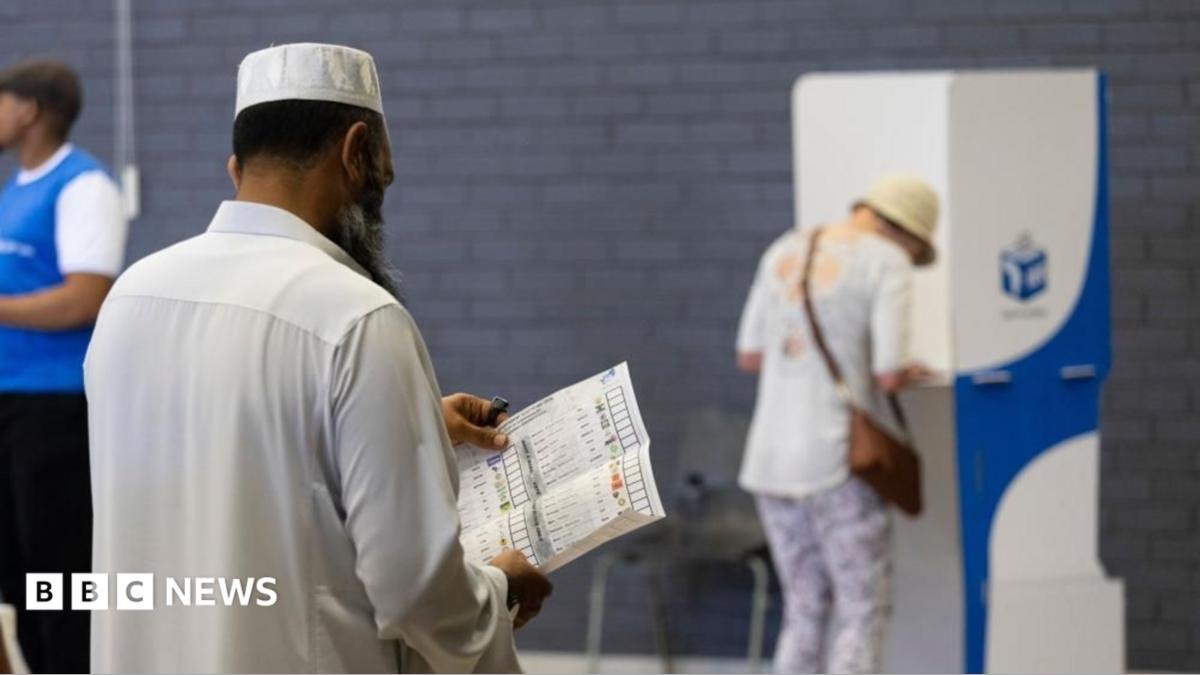
South Africa's ruling African National Congress (ANC) has suffered its worst local election result since the dawn of democracy in 1994, a outcome the party's own secretary-general described as "catastrophic." The ANC secured just 30.76% of the national vote, a sharp decline from the 46% it won in 2021 and a dramatic fall from the 64.82% it achieved two decades ago.
A Dramatic Decline
The party's losses were felt across the country. It won a majority in only one of the nine provinces, Limpopo, compared to six in the previous local elections. In the metropolitan municipalities, the ANC emerged as the largest party in just two of eight cities, down from six. The results underscore a growing disillusionment with the party that led South Africa out of apartheid.
"This has been a very catastrophic outcome for the ANC," said Fikile Mbalula, the party's secretary-general, speaking on Saturday. "We knew this disaster was coming. The cost of living for our people was too high. The middle class have turned on the ANC in big numbers."
President Cyril Ramaphosa, who also leads the ANC, acknowledged the voters' message. "We accept the will of the people, however concerning it might be," he said. "We accept it with humility. It is a decline that is concerning."
Opposition Gains and a New Political Landscape
The main opposition Democratic Alliance (DA) came second with 24.64% of the vote, retaining control of Cape Town. However, its overall share rose only marginally from 2021 and remained below its 2016 performance. Former president Jacob Zuma's MK party made a significant debut, finishing third with 9.76% and winning the city of Durban from the ANC. The Economic Freedom Fighters (EFF) followed with 6.22%.
Voter turnout increased to 52.29% from 45.9% in 2021, when the pandemic hampered participation.
Why Voters Turned Away
Analysts attribute the ANC's decline to persistent failures in service delivery and infrastructure. "These are huge problems that have really been affecting the lives of ordinary people, in the suburbs, in the townships, and in very dramatic ways," said political analyst Susan Booysen.
The ANC's troubles come on the heels of its loss of a national majority in 2024, which forced it into a coalition government with several parties. Now, the party faces the prospect of being shut out of key metros like Johannesburg and Pretoria as coalition negotiations begin. Parties have 14 days to form local governments.
A New Era for South African Politics
The results also signal a shift in voting patterns. The DA, historically seen as a party for white South Africans, attracted more black voters. "We're moving towards a post-racial voting pattern in South Africa," said analyst William Gumede.
Gumede added that the ANC's decline marks the end of the liberation movement's dominance. "The ANC is going to be a party that by 2029 could be the second biggest rather than the biggest party," he said. "This is a new era for South Africa's politics and also the ANC."
As coalition talks get underway, the ANC's future hangs in the balance. The party will also need to choose a successor to Ramaphosa next year, with few clear candidates in sight. For now, South Africa's political landscape has been fundamentally reshaped, and the ANC faces an uphill battle to regain public trust.